The story I'm reading aloud this month is Edgar Allan Poe's The Tell-Tale Heart, and I picked it because it was built to be spoken, not just read. You've probably had it summarised at you in school, the old man, the vulture eye, the floorboards, and thought that was the whole story. It isn't. The summary is the plot. The story is the voice, and the voice is the entire point.
I've set myself a rule for this: one story, one sitting, read aloud once a week, finished before I let myself stop. Mostly because I know what happens if I don't set rules: I end up with fourteen half read books and a guilty conscience shaped like a bookmark.
Why is The Tell-Tale Heart meant to be read aloud?
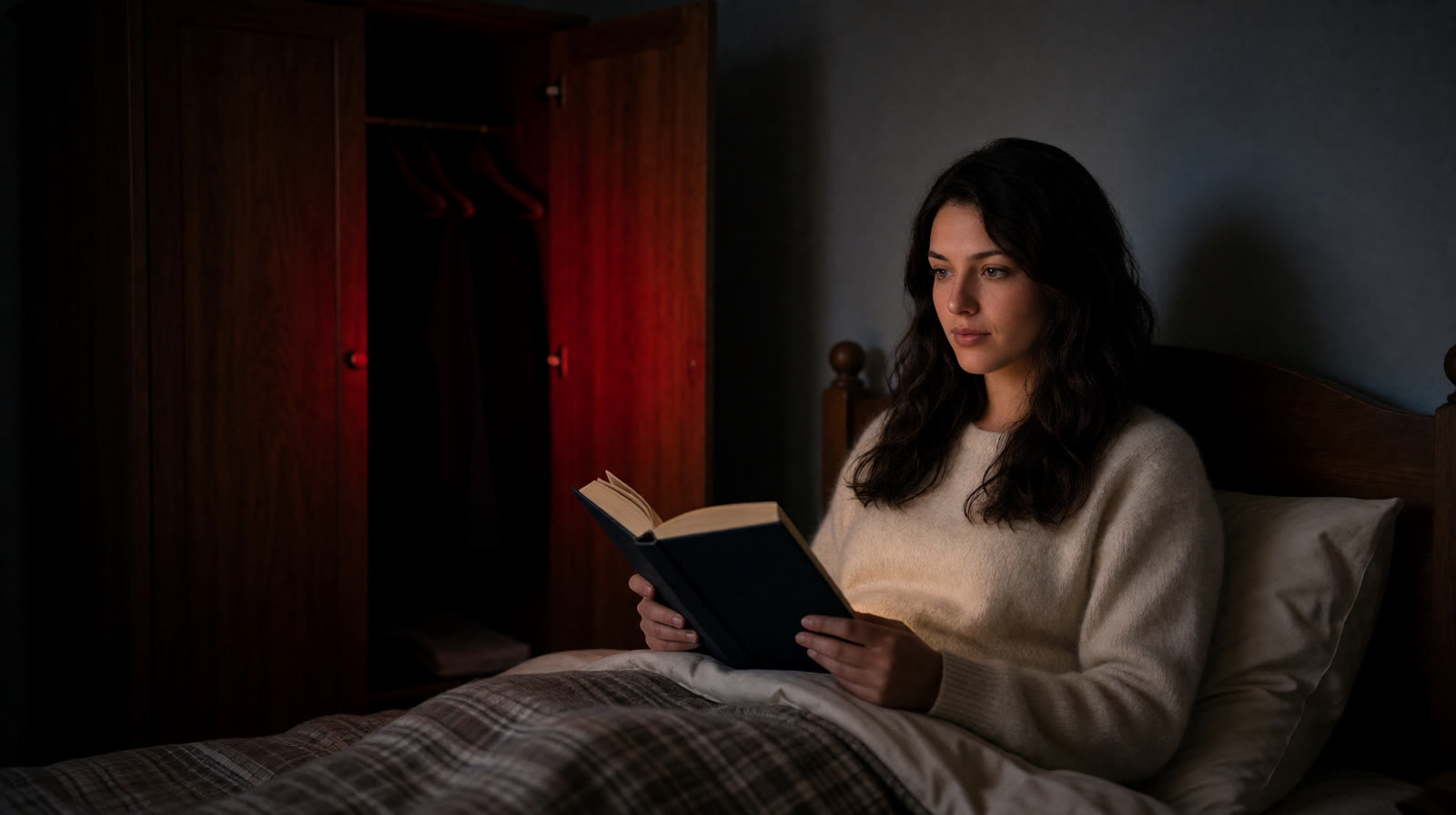
Here's the thing about The Tell-Tale Heart that I only really understood once I read it out loud, with a coffee going cold beside me and a camera doing its best not to notice: it is a confession, addressed to someone. Not to the reader in the abstract, to you, specifically, sitting there. "You fancy me mad," the narrator says, right at the start, like he can hear you doubting him. Read that silently and it's a clever line. Say it out loud and someone's talking to you.
Advertisement
The pacing does something similar. The sentences get shorter and closer together the nearer the story gets to the end, the way your own breathing does when you're trying not to panic. I didn't plan to read faster. I just did, because the words made me. That's not an accident. Poe was famously precise about rhythm, and this story reads like something built to be heard rather than skimmed. Once you notice it, you can't unnotice it.
Is The Tell-Tale Heart public domain?
Public domain usually gets mentioned as a legal technicality, old enough that nobody owns it any more, free to use. True, and useful, but it undersells what's actually on offer. These are stories that have survived roughly two hundred years of people deciding whether they're worth keeping. Nobody was forcing them into print. They just kept getting picked, generation after generation, because they still land.
It also means I get to read the whole thing. No abridging, no "for time" cuts, none of the compromises you make with a modern novel that's four hundred pages of somebody's very reasonable prose. The Tell-Tale Heart runs about twenty minutes read properly, unhurried, with room for the silences to actually be silent. That's rare. Most horror needs length to build dread. This one does it in the time it takes tea to steep, which still slightly annoys me as someone who has tried to write scary things and needed considerably longer.
What I got wrong, reading it the first time
I read it too fast on the first take, because I was nervous and nervous people rush. It came out sounding like I was late for a bus, not confessing to a murder. Had to do it again, slower, and let the pauses actually sit there instead of filling them. Small lesson, but it's the kind you only learn by trying, not by reading about reading aloud, which I appreciate is a slightly circular thing to admit in an article about reading aloud.
If this sort of thing appeals to you and you'd rather hold the stories than just hear mine, a Short ghost story collection is a genuinely good shelf to raid, the kind of book you can dip into for one story on a night when a whole novel feels like too much commitment. I keep mine by the sofa, next to the blanket, for exactly that reason.
Next up is the one about the monkey's paw and the three wishes, which I'm already slightly dreading in the good way, because everyone thinks they know how it ends and almost nobody remembers why it's actually upsetting. I won't spoil it. I will say: bring a jumper, and don't answer the door.
Ad · Includes affiliate links; we may earn a commission.
As an Amazon Associate I earn from qualifying purchases. How the links work.