
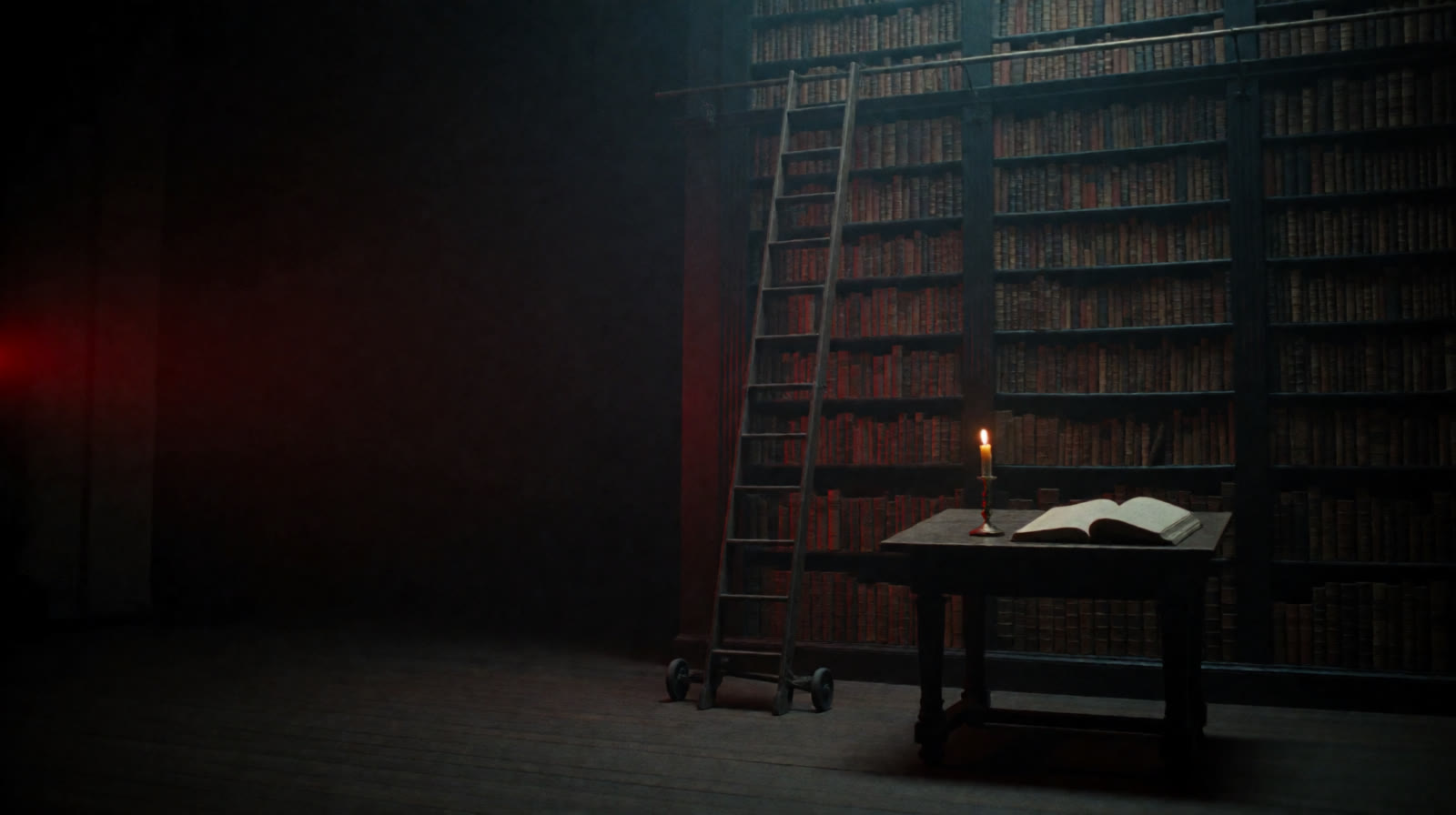
The Signal-Man by Charles Dickens is a short ghost story about a railway worker troubled by a mysterious figure near a tunnel, and it deserves a place beside your evening coffee. If Dickens makes you think of Scrooge before anything else, this is the other ghost story I’d put in your hands. It swaps the busy household for an isolated workplace, then makes the ordinary business of paying attention feel unbearable.
I like horror that gives me somewhere specific to be afraid of. A doorway. A landing. The patch beyond a lamp where the light gives up. Here, it is a railway cutting, with steep sides, a tunnel and a signal light. Nothing needs to leap out immediately. The place already feels like somewhere you would hurry through while pretending you weren’t hurrying.
That makes it a lovely choice for a quiet winter evening. January suits a tale that feels cut off from warmth and company, especially when you can approach it from the correct side of a blanket. I’m keeping the ending out of this review. You need the basic invitation, a little patience with the language and the chance to discover why a man doing his job has become so frightened.
Advertisement
What is The Signal-Man by Dickens about?
An unnamed narrator calls down to a railway signalman from above a cutting. Before they have properly met, something feels wrong. The signalman’s response doesn’t quite fit an ordinary greeting, and the narrator has to make his way down into the man’s strange, enclosed working world.
That descent matters. From above, the signalman is someone you might notice in passing. Down beside him, the narrator begins to understand the physical isolation of his post. The railway carries people through this place, but the man responsible for watching it stays behind. I find that a particularly unpleasant arrangement for a haunting. Everyone else gets to leave.
As they talk, the signalman describes an apparition whose appearances he connects with terrible events. He is distressed by what he has seen, but also by what he cannot understand. A warning is only useful if you know what it is warning you about. Otherwise, you are left with fear and a responsibility you cannot work out how to fulfil.
The narrator tries to make sense of his account. Is there a reasonable explanation? Is this a man whose solitude has affected him? Or is something happening that the narrator’s sensible questions cannot reach? Dickens lets those questions sit between the two men, making their conversations as important as the appearances themselves.
That is enough plot to take in with you. I wouldn’t go hunting for a full explanation before reading, because noticing what repeats is part of the pleasure. This is a complete short story, too. You aren’t signing up for a shelf-sized commitment or an evening spent remembering which cousin owns which house. There are very few places to hide, for the characters or for us.
The railway cutting does half the frightening
My favourite thing about the setting is that it belongs to a working railway. People depend on the signals being understood and the equipment being watched. This is a place organised around clear messages, precise actions and preventing harm. Put something inexplicable inside that system and you have a problem much nastier than a creaking door.
The signalman’s attention is part of his job. He cannot sensibly decide that the atmosphere is a bit much and move to a brighter room. He has to remain alert in the very place that frightens him. I can respect that while also feeling that my own application for the position would be withdrawn quite promptly.
Dickens makes the geography easy to feel even when the language takes a little more concentration. There is the height above the cutting, the confined space below and the darkness of the tunnel. The narrator can arrive from the outside world, but the signalman occupies a narrow stretch of it. Their different positions shape how much each man can understand.
Then there are the sounds. Voices, the bell and the movement of trains belong to the ordinary life of the railway. Once the signalman’s account begins to trouble that ordinary life, listening becomes uncomfortable. You start paying attention to things because the characters do, and because failing to notice something might matter.
I love this sort of horror on the page because the reader supplies so much of the timing. Nobody decides exactly how long you must stare towards the tunnel. You can pause over a description, return to an exchange or sit with an image until it becomes thoroughly unwelcome. Very generous of a book to let you arrange your own distress.
The cosy part comes from where you choose to read it. The story itself offers little comfort. That contrast is the attraction for me: a warm room around a cold, lonely place on the page. You don’t need thunder at the window or an elaborate Gothic reading corner. A decent lamp will do. I’d keep the lamp.
Why I care about the man as much as the ghost
A frightening setting only takes me so far. What gives this story its hold is the signalman himself. He comes across as thoughtful and conscientious, which makes his distress harder to dismiss. The narrator is not simply being handed a wild tale by someone who enjoys an audience. He is listening to a person who wants help.
That changes the shape of the fear. The signalman has a duty to protect others, yet the information that troubles him gives him no clear action to take. He is trying to interpret a message without the explanation he needs. I find that helplessness more disturbing than a threat that announces itself neatly and provides instructions.
It is also why I wouldn’t describe this as a cheerful little spooky read, even though it fits comfortably into a quiet evening. There is railway danger, talk of death and a sustained feeling of dread. The fear has a human cost. If you want a friendly ghost who sorts out a misunderstanding and leaves everyone feeling better, I would choose another companion.
The narrator’s attempts to reason with the signalman are interesting because they are understandable. When someone is frightened, you look for an explanation that might make them less frightened. You ask questions. You try to separate what happened from what they believe happened. Those are reasonable things to do, but the story makes you feel the limits of being reasonable from a safer position.
I don’t need to treat the supernatural as a fact outside the story to take that fear seriously. Within it, the uncertainty makes every attempt at reassurance feel fragile. The question becomes how much comfort one person can offer another when neither has enough information. There is something terribly lonely about being listened to and still not feeling safe.
That is where this differs, for me, from the reassuring associations Dickens can carry through A Christmas Carol. A familiar author does not guarantee a familiar sort of evening. If you mainly know his ghosts through Scrooge, leave room for a story with a much colder atmosphere and fewer places to rest.
How I’d make an evening of it
I’d give The Signal-Man one uninterrupted sitting if you can. Its conversations and repeated details benefit from staying close together in your mind. Reading a paragraph between messages could leave you remembering the tunnel very well while losing track of why a particular gesture or response feels wrong.
The older phrasing may take a moment to settle into, especially if you have just come from a very brisk modern novel. I wouldn’t try to force a grand literary voice onto it. Follow the two men talking. Keep track of who is describing an event and who is trying to explain it. The emotional situation is clear even when a sentence asks you to slow down.
For a winter reading, the appeal is spending time with one complete story. There is enough here to talk about afterwards without turning the evening into homework. I’d rather finish with a feeling, or a question about the narrator, than a page of notes proving I have been suitably attentive. Nobody needs a marking scheme beside the hot chocolate.
If you want to build a few more evenings around this kind of reading, a Short ghost story collection is a natural thing to look for on Amazon. Check the contents before choosing if you specifically want The Signal-Man included. A ghost-story collection gives you somewhere to go next, but I wouldn’t assume a particular story is there without seeing its title listed.
My recommendation comes with one small warning about expectations: this is quiet horror, and quiet does not mean cosy all the way through. Much of its effect comes from listening to an anxious man and watching another man try to understand him. If that sounds less exciting than a chase through a haunted house, I’d still give it a chance. Being unable to leave your post has its own awful tension.
For me, The Signal-Man earns an evening through that combination of a sharply drawn place and a person who cannot find relief within it. Dickens gives the fear somewhere to live, then makes us care about the man who has to work there. Settle in, read the whole thing before looking up the ending, and see which stays with you afterwards: the tunnel, the warning or the loneliness. I’d be interested to know.
Ad · Includes affiliate links; we may earn a commission.
As an Amazon Associate I earn from qualifying purchases. How the links work.