
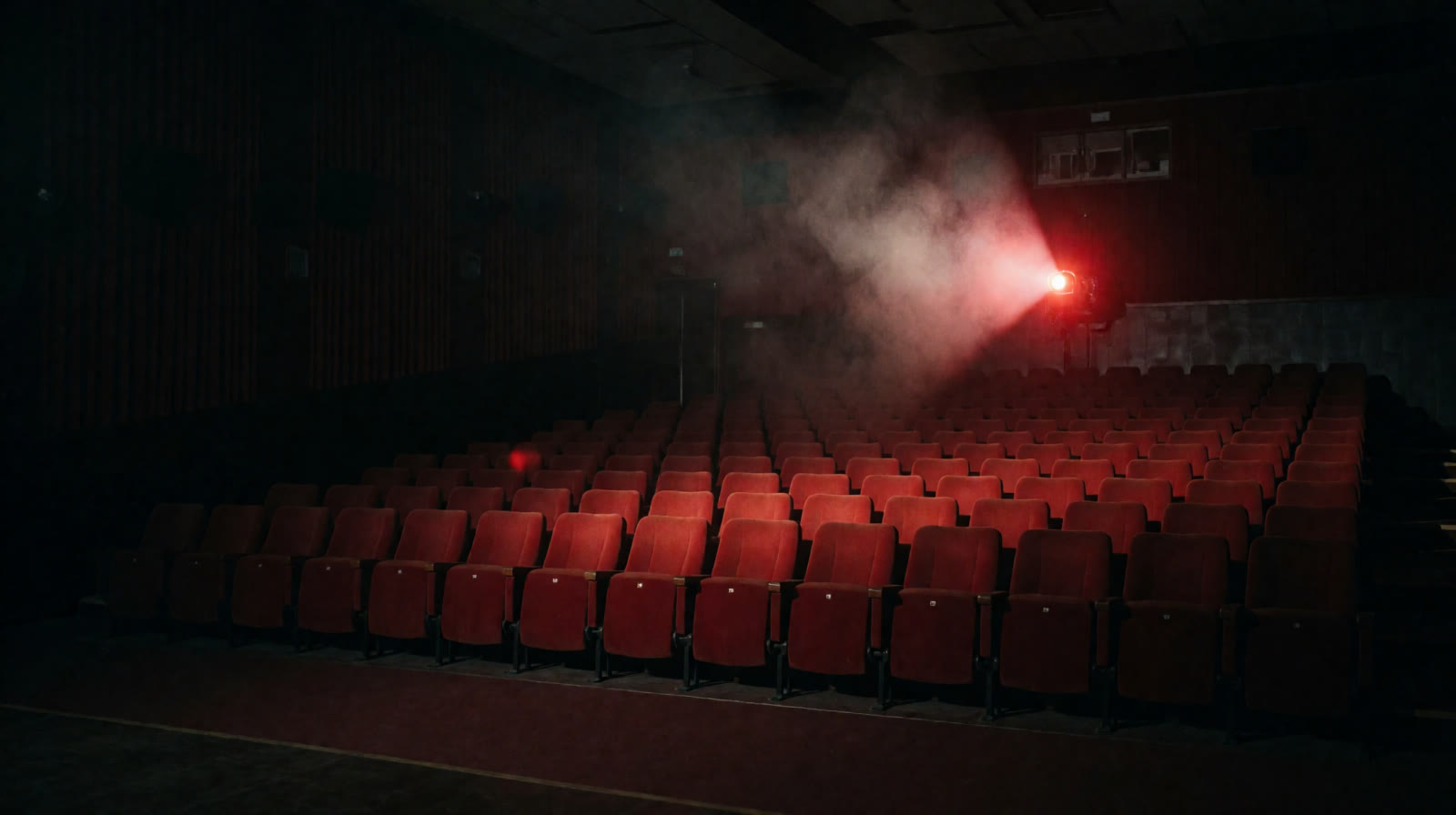
If you have typed the woman in black review into a search bar because you want a straight answer before you commit your evening to it, here it is. Watch the 1989 television version, turn most of your lights off, and do not answer the phone if it rings, because you might genuinely jump. This is one of those horror films that rewards a return every autumn without fail. It still works. Not in a forgive-the-old-effects, nostalgia sort of way either. It works because it understands something a lot of modern horror seems to have forgotten, which is that dread built slowly is far worse than anything leaping out of a cupboard.
The Woman in Black Review, Honestly
The story follows a young solicitor sent out to a remote house on the edge of a marsh, there to deal with the papers of a woman who has just died. The house can only be reached by a causeway that vanishes under the tide twice a day, which sounds like a minor inconvenience until you work out what it actually means. Once you are there, you are there. There is no popping back to the village for a bit of normal human company when the walls start doing something you would rather they did not. The village nearby goes quiet and strange the moment the house is mentioned, and nobody will say why. That refusal to explain is doing more work than it looks like it is. It tells you, long before anything actually happens, that whatever is out there is something the locals have already made their peace with, in the way people make peace with something by simply not talking about it.
From there, the film does exactly what a proper ghost story should do. It lets the dread build in ordinary places: an empty room, a rocking chair that should not be moving, a sound coming from a part of the house that should be empty. Nothing is explained too early. Nothing is shown too much. You are given fragments and left to assemble them yourself, which is a far more effective way to frighten someone than simply telling them what is going on. My honest woman in black review, if you want it in one line, is this. It is patient, it is properly unsettling, and it does not need a single drop of blood to get under your skin. It gets there through waiting, and through making you wait alongside it.
Advertisement
The Atmosphere That Makes It Work
Part of why this one still lands is how plain it looks. It was made for television on a modest budget, shot in a way that gives it a slightly flat, grainy quality next to the glossy horror we get now. Normally I would call that a weakness. Here it is the opposite. It looks like something that was actually filmed in a real, cold, draughty house rather than built on a horror set with a lighting rig designed to tell you exactly when to be scared. There is a rawness to it that a bigger budget would probably have sanded off, and a flatness to the picture that somehow makes the house feel more real, not less, the way a photograph taken on an ordinary camera can feel more honest than one that has been carefully lit.
The sound does a lot of the work too. Wind against glass, the creak of a house settling, long stretches with no music at all, so that when a noise does come, you hear it properly rather than being cued by a swell of strings telling you to brace. The pacing is slow at the start, deliberately so. You spend time with the solicitor before anything happens to him, watching him go about ordinary business, sorting papers, making small talk with people who clearly do not want to make small talk with him. That patience means that when the house starts doing what it does, you are already uneasy on his behalf rather than waiting for a jump scare to arrive on schedule. It is a film that trusts you to sit still and pay attention, which feels almost old fashioned now, when so much horror seems built for someone half watching on a second screen.
What stands out is how little the film actually shows you, and how much that restraint achieves. A single figure standing somewhere it should not be standing does more damage to your nerves here than a whole parade of effects would in most modern films. It is a good reminder that fear is mostly built in the viewer's own head. The film just gives you the conditions for it and steps back.
How It Compares to the Stage Play and the 2012 Film
The Woman in Black started life as Susan Hill's novel, and it has had a strange afterlife since. There is the long-running stage adaptation, built around two actors and almost nothing else, where the whole trick is that your imagination does the scaring because the theatre cannot show you very much at all. It is a different kind of frightening, the sort that comes from what is implied rather than what is on show, and it works brilliantly in a room full of other people trying not to flinch together. If you have ever sat in a dark theatre and felt the entire row tense up at the same moment, you will know exactly what that production is chasing, and it earns it fairly.
Then there is the 2012 film, the one with a much bigger budget, a wider release and considerably more polish. It leans harder on jump scares and visual effects, and it looks the part in a way the 1989 version simply could not afford to. I do not dislike it. It has its moments, and it clearly understands the source material well enough to hit some of the same beats. But it plays more like a conventional horror film, all timed shocks and careful production design, where the television version plays more like something that might actually happen to you, in a house that might actually exist, on a coast road that might actually flood. Given the choice on a proper foggy night, the 1989 version is the one to reach for. It is the version that stays with a viewer after the credits, rather than the one that delivers the hardest jump while it is on. There is a difference between a film that frightens you for ninety minutes and one that quietly stays in your head for the rest of the week, and this is firmly the second kind.
Why It Is the Right Film for a Foggy Night In
This is exactly the sort of horror I mean when I say cosy does not have to mean gentle. Put the kettle on, get under a blanket, dim the lamps down to one, and let this one run without talking over it. It rewards quiet more than almost anything else on offer this time of year. The slow build means you cannot really have it on in the background while you do something else. It wants your full attention, and it earns it. It is best saved for an evening when the wind is actually doing something outside, because that somehow makes the house on screen feel closer to the one you are sitting in.
It is also, oddly, a good one to watch with someone else, as long as that someone can sit still and keep quiet. Half the pleasure is in the shared silence right before something happens, the moment where you both know something is coming and neither of you says a word. Talk about it afterwards, not during. That is a rule worth holding fairly firmly with this one.
If you have already seen it and you agree with me, I would love to know which bit got you. Was it the house, the marsh, or that first proper sighting of her? If you have not seen it yet, I am almost jealous, because you still get to have that first watch where you do not know what is coming. Either way, that is my honest take on where The Woman in Black sits among the ghost stories that actually deserve their reputation, and why it still deserves the reputation it has, and why it is the one worth reaching for first when the evenings draw in and something properly unsettling is wanted rather than just an hour filled.
As an Amazon Associate I earn from qualifying purchases. How the links work.